Waterjet cutting technology has revolutionized industrial fabrication by offering a cold-cutting process capable of slicing through virtually any material with high precision. The performance of a waterjet system relies on the synergy of several key components. Understanding these parts and their applications is essential for optimizing cutting efficiency, reducing downtime, and minimizing operational costs.
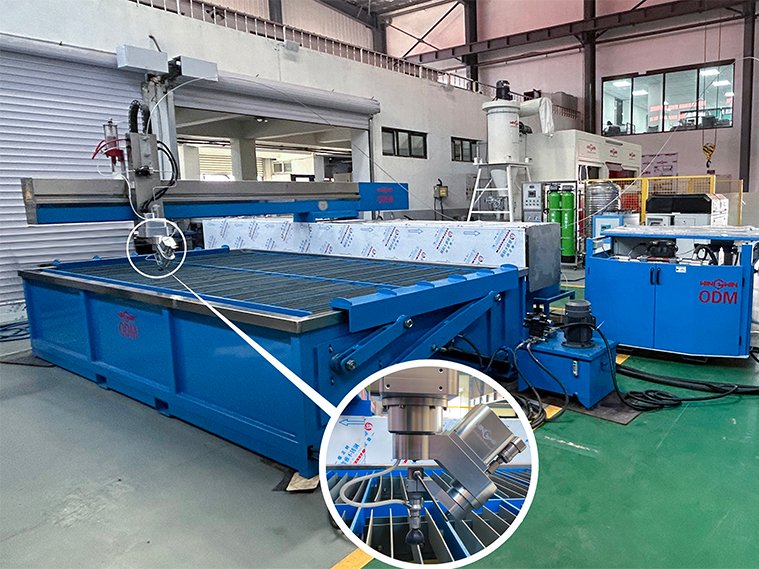
The heart of any waterjet system is the intensifier pump or direct drive pump. The intensifier pump uses hydraulic pressure to force water through a tiny orifice at ultra-high pressures (up to 90,000 psi). Its reliable operation is critical for maintaining consistent pressure. Alongside the pump, the abrasive hopper and metering system feed garnet abrasive into the water stream for cutting hard materials like steel, stone, or glass. For pure water cutting (e.g., food or soft plastics), the abrasive system is bypassed.
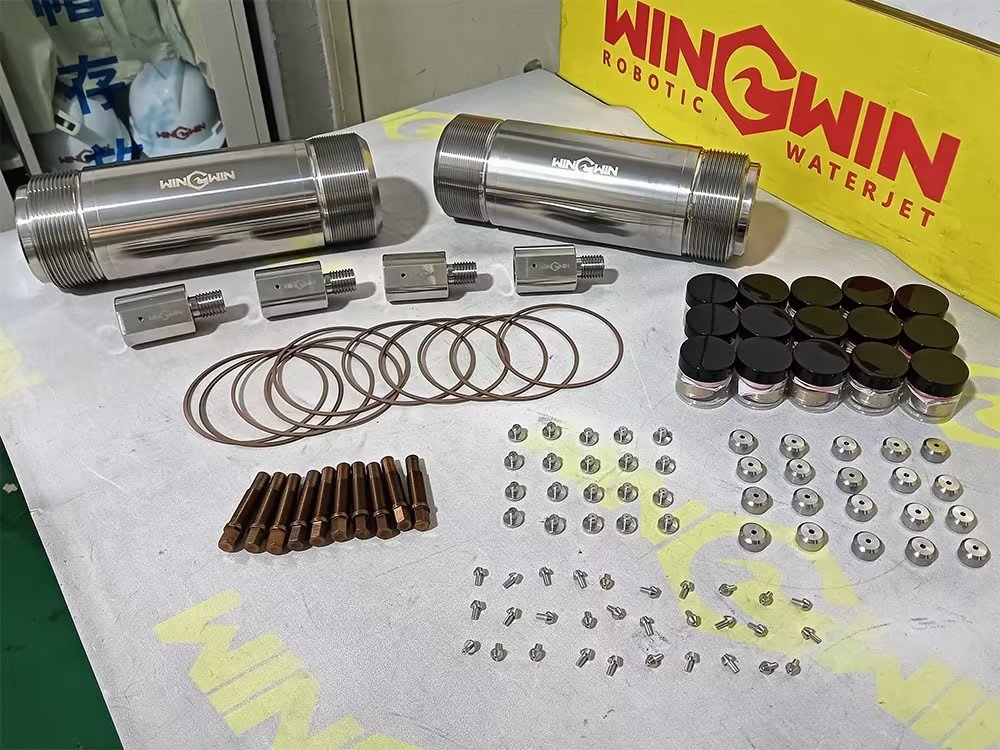
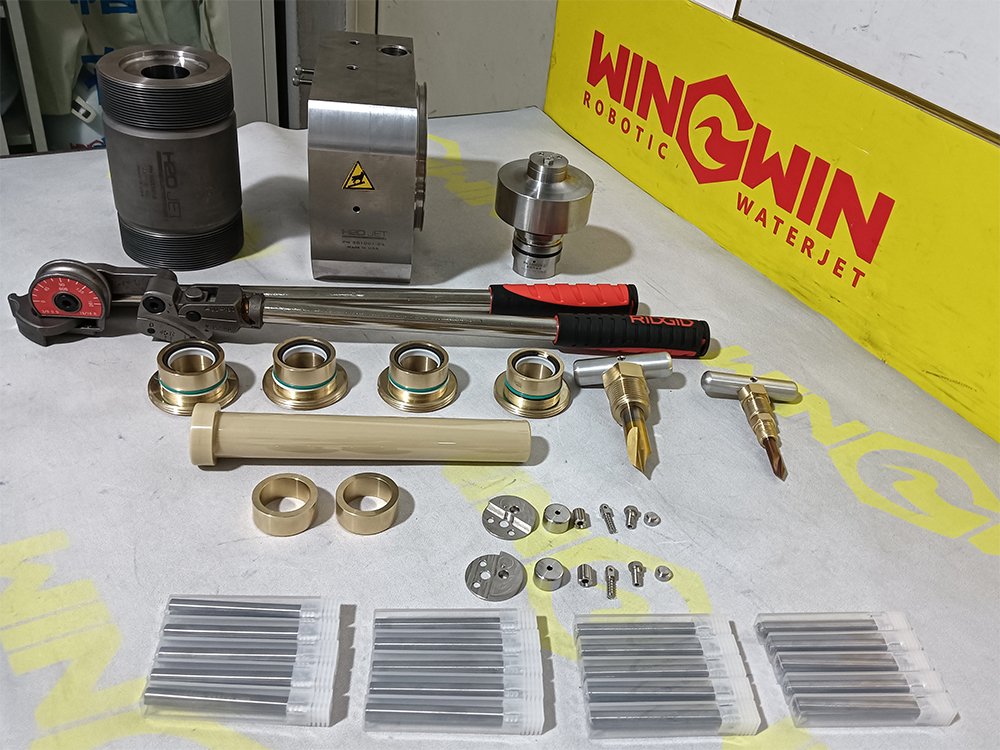
The cutting head is where the actual cutting occurs. It houses the orifice (jewel)—typically made of synthetic diamond or sapphire—which creates a fine, high-velocity water jet. Below the orifice sits the mixing tube (nozzle) . Made of wear-resistant carbide, the mixing tube draws in abrasive particles and mixes them with the water jet, producing a coherent stream capable of eroding thick metal. Finally, the catcher tank absorbs the remaining jet energy after cutting, using water to decelerate the stream and contain noise.
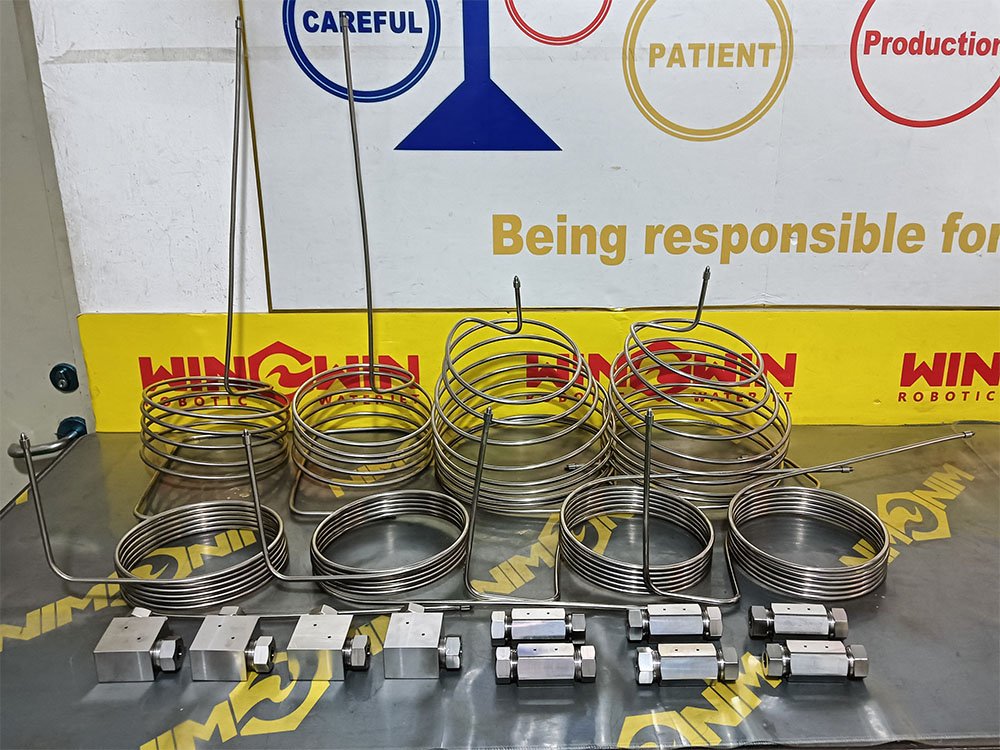
Supporting systems include high-pressure tubing (often ¼-inch diameter stainless steel with specialized fittings), filtration units, water softeners, and CNC motion control systems.
Application Insights
Selecting and maintaining these parts directly affects different cutting tasks.
Manufacturing & Metal Fabrication: For cutting titanium, hardened steel, or Inconel, a robust intensifier pump (60,000–90,000 psi) and a larger mixing tube (1.0–1.5 mm ID) are necessary. Frequent replacement of the mixing tube (every 100–200 hours) and orifice (every 200–400 hours) is common due to abrasive wear.
Stone & Tile Cutting: When cutting granite or marble, the abrasive system is essential. Operators should use high-quality garnet (80 mesh) and ensure the hopper has moisture control to prevent clogging. A catcher tank with an efficient sludge removal system helps manage heavy sediment.
Glass & Aerospace Composites: Pure water cutting (without abrasive) avoids micro-cracking in glass or delamination in carbon fiber. Here, a sapphire orifice and a specialized low-wear mixing tube maintain fine tolerances (±0.005 inches). The water must be deionized to prevent mineral deposits on sensitive surfaces.
Food & Medical Products: Sanitary applications use a waterjet with a high-pressure pump (up to 60,000 psi) but no abrasive. All wetted parts—from tubing to the cutting head—must be made of 316 stainless steel or FDA-approved plastics. Daily cleaning of the orifice and the catcher tank’s filtration system prevents biofilm growth.
Maintenance Best Practices
To maximize part life, replace the orifice and mixing tube as a set—worn orifices create turbulent flow, accelerating mixing tube damage. Use only filtered, softened water (filtration ≤0.45 microns) to prevent premature jewel failure. Finally, regularly inspect high-pressure tubing for micro-cracks, as catastrophic bursts pose serious safety hazards.
From heavy steel plate processing to delicate medical device trimming, waterjet cutting parts are the building blocks of a versatile, cold-cutting ecosystem. By choosing the right intensifier, nozzles, and abrasives for each material, and adhering to rigorous maintenance, manufacturers can achieve clean edges, minimal heat-affected zones, and virtually no material waste. As industries push for greener and more precise fabrication, understanding these components remains key to unlocking waterjet technology’s full potential.